
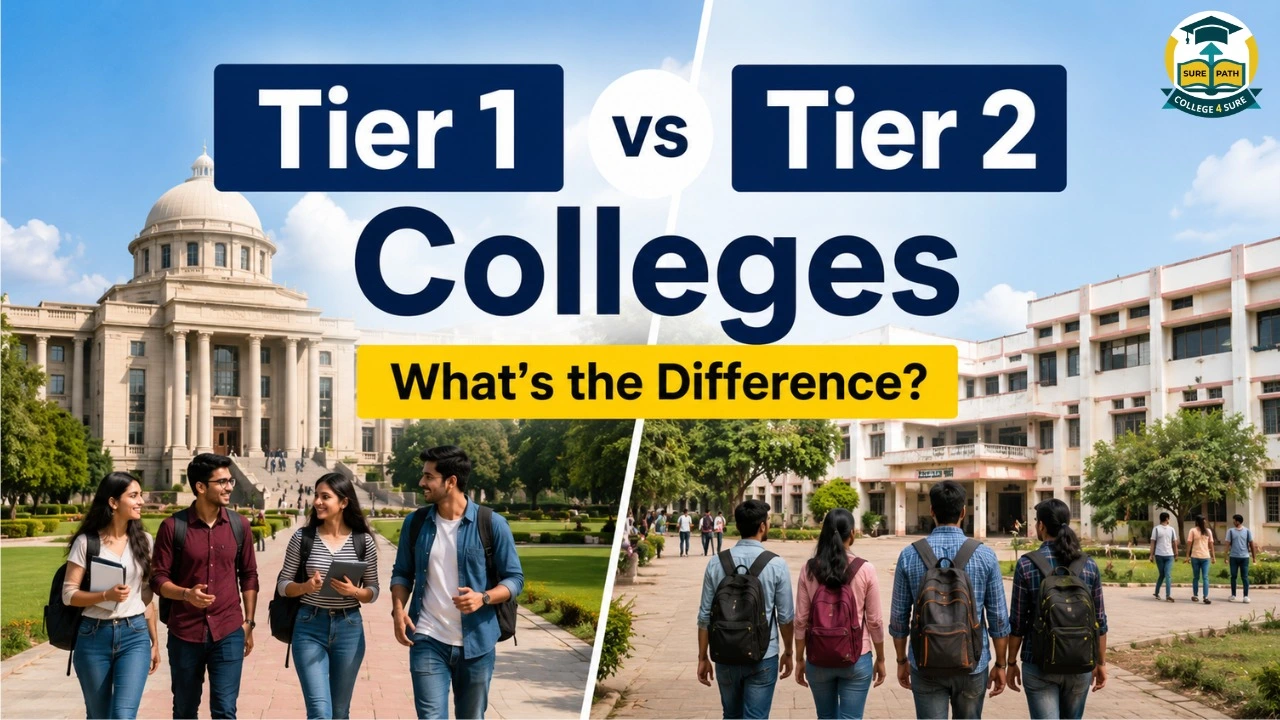
Tier 1 vs Tier 2 Colleges: What’s the Difference?
College selection is probably the most crucial decision that one will make during their academic years. Aspiring students in India will often come across terms such as “tier 1 colleges” and “tier 2 colleges” while trying to seek admission in the best colleges for engineering, management, law, medicine, science, etc. Many students are unaware of the actual significance of these tiers in relation to educational benefits, placements, campuses, and career prospects.
The controversy between Tier 1 vs Tier 2 colleges has become highly significant since employers are now placing equal importance on skills, internships, communication, and industry experience along with prestigious colleges. Whereas Tier 1 colleges are synonymous with prestige and placements, tier 2 colleges are upgrading their facilities and industry connections.
What Are Tier 1 Colleges?
The Tier 1 college is regarded to be the best among all other colleges in terms of prestige. This type of college includes excellent academics, world-renowned faculty, state-of-the-art research laboratories, tough admissions process, and high placement rate.
Tier 1 colleges in India may include top engineering colleges, top management colleges, renowned law colleges, and best medical colleges.
Top Tier 1 Engineering Colleges in India – IITs, NIITs, IIITs, DTU, BITS etc.
Top Tier 1 Management Colleges in India – IIMs, Baby IIMs, FMS, XLRI, ISB, SPJIMR etc.
Top Tier 1 Medical Colleges in India – AIIMs, AFMC, JIPMER, MAMC etc.
Top Tier 1 Law Colleges in India – NLUs, NALSAR Hyderabad, WBNUJS Kolkata etc.
Key Features of Tier 1 Colleges
- High national and global rankings
- Strong placement records with top recruiters
- Excellent faculty and research exposure
- Competitive entrance exams and cutoffs
- Better industry partnerships
- Large alumni network
- Advanced campus infrastructure
- Strong brand value in the job market
What Are Tier 2 Colleges?
Tier 2 colleges refer to those colleges that provide excellent academic quality and do not necessarily match the Tier 1 colleges in terms of reputation, research work, and placement programs. Nonetheless, there is an upward trend in these colleges whereby they are producing competent graduates who excel in their professional lives. These colleges normally have moderate competition for admission.
Key Features of Tier 2 Colleges
- Affordable fee structure in many cases
- Decent placement opportunities
- Growing industry connections
- Good academic curriculum
- Better student diversity
- Moderate competition in admissions
- Improving infrastructure and facilities
- Strong focus on skill development
Tier 1 vs Tier 2 Colleges: Major Differences
|
Factors |
Tier 1 Colleges |
TTier 2 Colleges |
|
Reputation |
National and international recognition |
Regional or emerging recognition |
|
Admission Difficulty |
Extremely competitive |
Moderately competitive |
|
Placement Opportunities |
Top multinational companies visit regularly |
Mid-level and growing recruiters |
|
Average Salary Packages |
Generally higher |
Moderate but improving |
|
Infrastructure |
Advanced labs and facilities |
Modern but cooperatively |
|
Research Exposure |
Strong focus on innovation and research |
Limited but growing research opportunities |
|
Alumni Network |
Large and influential |
Smaller but supportive |
|
Industry Exposure |
Extensive collaborations and internships |
Developing industry connections |
|
Student Competition |
Highly competitive environment |
Balanced academic environment |
Admission Process Comparison
Tier 1 College Admissions: Admission to Tier 1 colleges is usually based on highly competitive entrance examinations. Students often spend years preparing for these exams due to intense competition.
Common Admission Characteristics
Getting into reputed universities and colleges is quite difficult owing to extremely high cut-off marks and less availability of seats among all the courses. Students need to qualify at national level entrance examination conducted by most educational institutes. It is only then that they will get admission into the institutes based on excellent rank positions. In addition, there can be several other tests like group discussion, interview, counselling, and skills test involved in the entire process of selection.
Tier 2 College Admissions: Tier 2 colleges generally have more flexible admission criteria. While many still accept entrance exam scores, the competition level is relatively lower.
Common Admission Characteristics
The process of admission in most private and new colleges is relatively easy because of the average cut-off marks and more seats in different courses. There are some colleges that provide admission directly depending upon the merit of the candidate. Along with the national level tests, there are also some colleges that consider the state level or university level tests for admission. There is also a provision of flexible eligibility criteria that permits candidates with varied educational backgrounds to appear for the admission tests.
Placement Opportunities
Placements are one of the biggest factors students consider while choosing a college.
Placements in Tier 1 Colleges: Tier 1 institutions attract top recruiters from various industries such as technology, consulting, finance, healthcare, and research.
Advantages
- Higher salary packages
- International job opportunities
- Better internship programs
- Campus recruitment from global companies
- Strong startup ecosystems
Placements in Tier 2 Colleges: Tier 2 colleges also offer placement opportunities, though the number of top recruiters may be comparatively lower.
Advantages
- Good opportunities for skilled students
- Growing corporate partnerships
- Local and regional company recruitment
- Better opportunities for practical learners
Choose the Right Career with AI Support

You can make intelligent and well-calculated decisions about your career path with the help of CLARIO , an AI-based tool for careers which is completely free from SurePath4Success. CLARIO will guide you on how suitable you are for various courses based on its analysis and also provides you with a psychometric assessment to learn more about yourself in terms of your interests, abilities, and inclinations.
Infrastructure and Facilities
Infrastructure significantly impacts the learning experience.
Tier 1 Colleges: These colleges often feature:
- Smart classrooms
- Advanced laboratories
- Research centres
- Large libraries
Tier 2 Colleges: Many Tier 2 institutions are investing heavily in infrastructure upgrades.
Common Facilities
- Modern classrooms
- Computer labs
- Sports complexes
Faculty and Academic Quality
Tier 1 Colleges: Faculty members in Tier 1 colleges often include researchers, industry experts, and internationally recognized academicians.
Academic Benefits
- Strong mentorship
- Research-based teaching
- Advanced curriculum
- Innovation-driven projects
Tier 2 Colleges: Faculty quality in Tier 2 colleges can vary, but many institutions employ experienced educators focused on practical learning.
Academic Benefits
- Personalized attention
- Practical classroom teaching
- Industry-focused curriculum
- Skill-oriented training
Fee Structure Comparison
|
Aspect |
Tier 1 Colleges |
Tier 2 Colleges |
|
Tuition Fees |
Generally higher |
Moderate or affordable |
|
Hostel Charges |
Premium facilities may cost more |
Budget-friendly options available |
|
Scholarships |
Merit-based scholarships available |
Scholarships and financial aid available |
|
Return on Investment |
High due to strong placements |
Good with proper skill development |
Students should always evaluate the return on investment rather than focusing only on college reputation.
Is Tier 1 Always Better Than Tier 2?
The answer depends on the student’s goals, interests, financial situation, and learning style. A Tier 1 college may offer better brand recognition and placement opportunities, but success ultimately depends on individual performance. Many students from Tier 2 colleges achieve remarkable success through dedication, networking, internships, and continuous learning.
Important Factors Beyond College Tier
- Communication skills
- Technical expertise
- Internship experience
- Leadership abilities
How to Choose the Right College
Before selecting a college, students should evaluate multiple factors rather than focusing only on tier classification.
Things to Consider
1. Course Quality - Check whether the curriculum matches industry trends and career goals.
2. Placement Support - Analyse internship opportunities, recruiter profiles, and skill training programs.
3. Faculty Expertise - Look for experienced faculty members and mentorship opportunities.
4. Infrastructure - Evaluate laboratories, libraries, hostels, sports facilities, and digital resources.
5. Industry Exposure - Consider collaborations, workshops, seminars, and live projects.
6. Location - The college location can impact internships, networking, and industry exposure.
7. Fees and Scholarships - Ensure the college fits your financial planning and offers scholarship support if needed.
Common Myths About Tier 1 and Tier 2 Colleges
Myth 1: Only Tier 1 Students Get Good Jobs
Reality: Skilled students from Tier 2 colleges regularly secure excellent placements.
Myth 2: Tier 2 Colleges Have Poor Education
Reality: Many Tier 2 colleges now provide industry-focused education and modern facilities.
Myth 3: Brand Name Guarantees Success
Reality: Personal skills, work ethic, and practical knowledge matter more in the long run.
Myth 4: Tier 1 Colleges Are the Only Path to High Salaries
Reality: Consistent skill development and networking can help students from any college achieve strong career growth.
Your trusted partner for college admission guidance in India
Finding the right college after Class 12 or graduation can be confusing. College4sure offers expert college admission guidance for both UG and PG admissions in India, helping students with college shortlisting, application support, and career counselling. Whether seeking top undergraduate or postgraduate colleges, College4sure makes your higher education journey simple and stress-free.
College4sure helps the students get admissions to the right MBA colleges in India through accurate and updated admission guidance. It helps students in shortlisting the right colleges and guides them through the admission process.
Conclusion
Choosing between Tier 1 and Tier 2 colleges in India is no longer straightforward. While top-ranked colleges offer superior placements and campus exposure, many Tier 2 colleges now provide excellent infrastructure, faculty, and industry training. Career success depends more on skills, communication, and attitude than college brand alone. Students must evaluate colleges based on academics, career goals, fees, and learning environment before making their college admission decision.
Frequently asked
What is the difference between Tier 1 and Tier 2 colleges?
Are Tier 2 colleges good for placements?
Which tier is better for career growth?
What should I check before choosing a college?
Can Tier 2 students get high-paying jobs?
Still deciding?
Talk it through with someone who has helped hundreds of students choose.